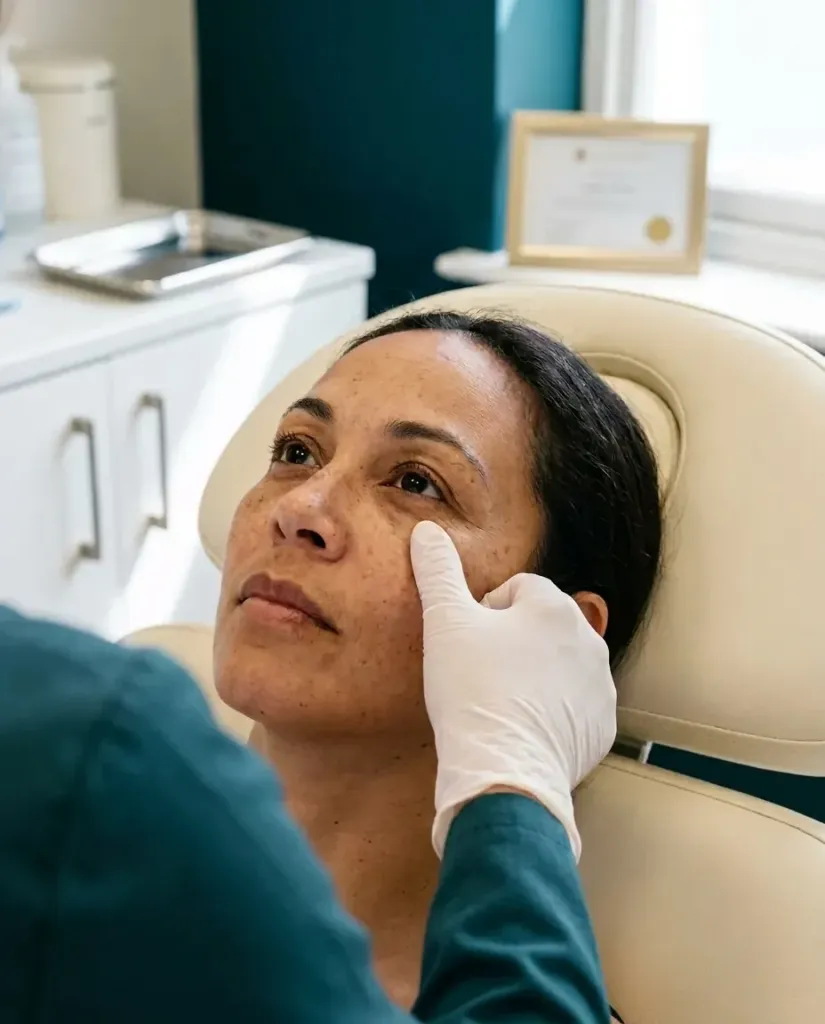
The skin under your eyes is the thinnest on your face, and it’s often the first place to look tired. Polynucleotides are the treatment I’m asked about most for it. Here is my honest view of what they can do, what they can’t, and how to tell whether they’re right for you.
What polynucleotides are
Polynucleotides are an injectable skin treatment that works on the quality of the skin itself. They don’t add volume the way filler does, and they don’t relax muscles the way anti-wrinkle injections do. Over a course, they can improve skin texture, tone and elasticity, so the area looks fresher and less crepey.
Polynucleotides are a biostimulator, which means they work at a cellular level to increase skin cell production. They activate the fibroblast cells in your skin, so it naturally produces more collagen and elastin.
The polynucleotides I use come from salmon or trout, so they aren’t suitable if you have a fish allergy.
What they can do under the eyes
Polynucleotides suit you best when the concern is the skin, not what’s underneath it:
- fine, crepey lines under the eyes
- skin that looks thin, dull or tired
- an under-eye area that has lost its freshness
Think of it as an under-eye refresh. You still look like you, only more rested.
What they can’t do
This is the part I’d rather you heard before you book.
- They don’t replace volume. If you have a real hollow under the eye, that is a volume concern, and tear trough filler may suit you better.
- They can’t do what surgery does. Loose skin and under-eye bags are beyond what polynucleotides can change.
- They aren’t a one-session treatment. The result builds over a course.
The right treatment depends entirely on the cause of the concern. That’s why I always look at the area properly at a consultation first, and if polynucleotides aren’t right for you, I’ll tell you.
How many sessions, and when you’ll see it
I recommend a course of 3 sessions, 4 weeks apart. Your skin starts to improve gradually, and the full effect builds over 3 to 6 months. Results last up to 9 months, depending on your age, your lifestyle and your skin. After your course, 1 to 2 maintenance sessions a year keep it going.
The appointment and the days after
I’m very cautious with the under-eyes, so I take my time. Afterwards you may have slight redness, small bumps where the product sits, some swelling or a bruise. Redness usually fades within a day, and bumps and swelling within a few days. Most of my clients go back to work the same day or the next.
Keep make-up off the area for 12 hours, and avoid saunas and hard exercise for 48 hours. I’ll go through your aftercare with you before you leave.
What it costs
Polynucleotides for the under-eyes are £300 a session, or £660 for a course of three, which saves £240. Your consultation is £30 and comes off your treatment.
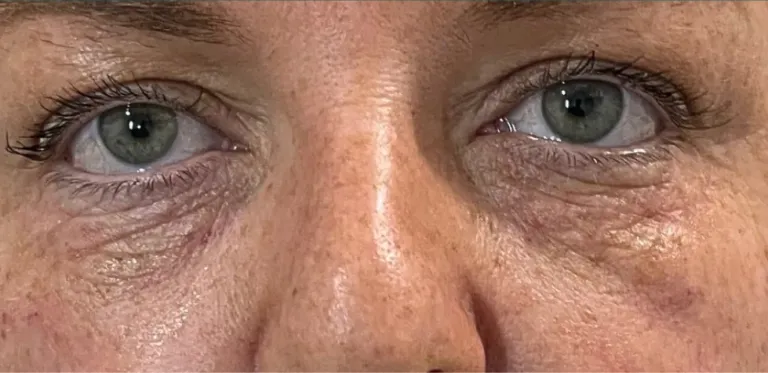
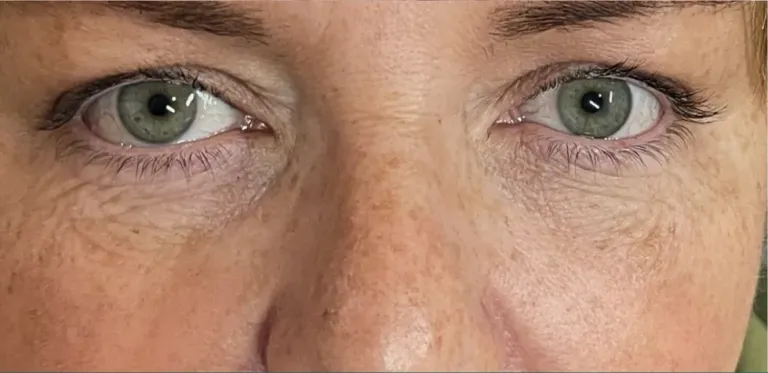
Before and after · Under eyes
Polynucleotides
A real client of mine. Every face is different, so results vary from person to person.
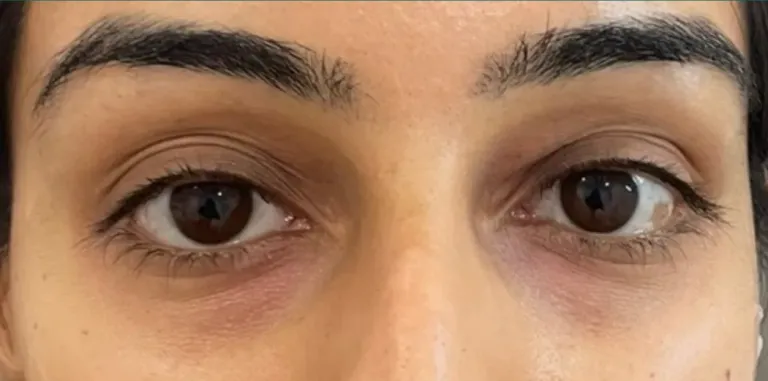
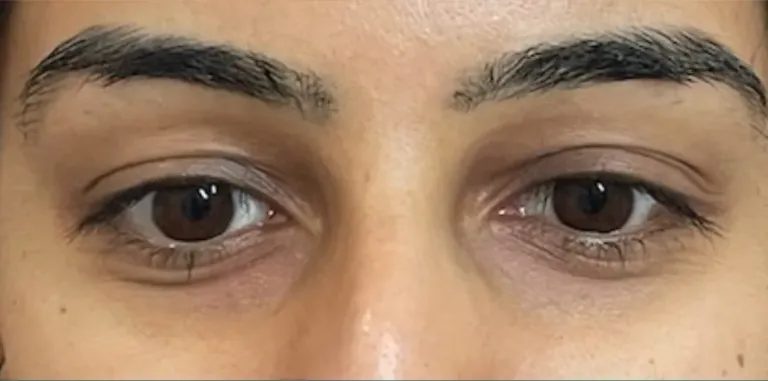
Before and after · Under eyes
Polynucleotides
A real client of mine. Every face is different, so results vary from person to person.
Real clients of mine. Every face is different, so results vary from person to person. All treatments carry risks. Consultation first.
Your questions
Are polynucleotides or tear trough filler better for under-eyes?
It depends on the cause. If there is significant hollowing, tear trough filler may be the better choice. If the concern is the quality of the skin, polynucleotides usually suit better. I assess the area at your consultation and tell you which I’d choose.
Who shouldn’t have polynucleotides?
They aren’t suitable if you have a fish allergy, if you’re pregnant or breastfeeding, or while an autoimmune condition is flaring. Tell me about your health and any medication at your consultation.
Can Profhilo be used under the eyes?
No. I don’t use Profhilo under the eyes. For that area it’s polynucleotides or tear trough filler, depending on what’s causing the concern.
Come and see me in King’s Cross
My clinic is at 260 Pentonville Road, about three minutes’ walk from King’s Cross St Pancras, and Angel is walkable too. Clients come to me from Islington, Camden, Farringdon and across London. If you’d like me to look at your under-eyes and tell you honestly what would help, book a consultation or read more about polynucleotides at my clinic.